Friday, August 28, 2015

He earns $8,000 a month but chooses to take public transport

Nice one...You need to be staying in Singapore...

So, I’ve this friend. He prefers not to be named so let’s just call him Glenn. Glenn is a thirty-five-year-old department manager in a MNC, having gone through the typical Singaporean path of going to a Singapore JC then a local university with a scholarship. He started work since he graduated, job-hopped two times and now, he’s ready to settle down in this company, drawing a gross pay of $8,000 a month.
Single, rich and without commitment, he has a few credit cards but every morning, he still takes a bus to his office at Tuas, despite having the financial capability to buy a car.
So, why does he do this? Here’re the reasons he provide, and to be honest, it’s just so convincing that anyone owning a car could just sell off theirs now.
It’s a depreciating asset
“I won’t say it’s an asset at all—you’re essentially ‘renting’ the car because it belongs to a bank. Even if you pay for it in full, the depreciation is so high that you’re practically just burning cash as every day passes.”
Well, this is clear-cut for many.
It’s not convenient
“I know this seems unbelievable, but hear me out first. You see, some people, after work, would want to buy some food. If you’re driving, you’re just getting from point A to B. Yes, you may stop somewhere to buy food, but that’s a detour. If you’re taking the train, the infrastructure in Singapore would allow you to buy whatever you need on your way to somewhere. Want to grab some breakfast on the way to work? You can get it from any MRT station.”
Peak hours are unpredictable
“There have been train breakdowns, but they’re not as frequent as jams in expressways during peak hours. My understanding is that peak hours jams are almost an everyday affair—someone could spend an hour or more from Jurong to Tampines because of the jams. With trains, without breakdown, it’s an absolute one hour journey. We all don’t like uncertainty, right?”
You can’t do things in cars
“Time is precious and the time spent in driving requires full concentration; however, taking public transport gives you the freedom to catch up on old friends in Facebook, or if you’re a workaholic, read up on a report. To me, anything that can save my time is a good thing.”
You won’t get high blood pressure
“I’ve driven before and within that short frame of time, I think my blood pressure increases by a tad. Driving in Singapore is like a test of your patience—if you’re driven, you’ll just relax and sit as the driver complains. So, why not?”
Public transport in Singapore is awesome
“Agree or not is hugely subjectively, but if you’ve been to many places, especially the sub-urban areas, you’ll know how good and efficient our system is, albeit the breakdowns.”


Sunday, August 23, 2015

Cockroach Theory- A beautiful speech by Sundar Pichai.

Cockroach Theory 
A beautiful speech by Sundar Pichai - an IIT-MIT Alumnus and Global HeadGoogle Chrome:
The cockroach theory for self development
At a restaurant, a cockroach suddenly flew from somewhere and sat on a lady.
She started screaming out of fear.
With a panic stricken face and trembling voice, she started jumping, with both her hands desperately trying to get rid of the cockroach.
Her reaction was contagious, as everyone in her group also got panicky.
The lady finally managed to push the cockroach away but ...it landed on another lady in the group.
Now, it was the turn of the other lady in the group to continue the drama.
The waiter rushed forward to their rescue.
In the relay of throwing, the cockroach next fell upon the waiter.
The waiter stood firm, composed himself and observed the behavior of the cockroach on his shirt.
When he was confident enough, he grabbed it with his fingers and threw it out of the restaurant.
Sipping my coffee and watching the amusement, the antenna of my mind picked up a few thoughts and started wondering, was the cockroach responsible for their histrionic behavior?
If so, then why was the waiter not disturbed?
He handled it near to perfection, without any chaos.
It is not the cockroach, but the inability of those people to handle the disturbance caused by the cockroach, that disturbed the ladies.
I realized that, it is not the shouting of my father or my boss or my wife that disturbs me, but it's my inability to handle the disturbances caused by their shouting that disturbs me.
It's not the traffic jams on the road that disturbs me, but my inability to handle the disturbance caused by the traffic jam that disturbs me.
More than the problem, it's my reaction to the problem that creates chaos in my life.
Lessons learnt from the story:
I understood, I should not react in life.
I should always respond.
The women reacted, whereas the waiter responded.
Reactions are always instinctive whereas responses are always well thought of.
A beautiful way to understand............LIFE.
Person who is HAPPY is not because Everything is RIGHT in his Life..
He is HAPPY because his Attitude towards Everything in his Life is Right..!!

Tuesday, August 18, 2015

5 Common Mistakes Made by Singaporeans in Search of Their Dream Home

So you fell in love with the penthouse's infinity pool or were bowled over by the sea view from the living room. But before you eagerly hand over the booking fee or deposit, stop right there. There's nothing worse than sentencing to yourself to a life of home loan repayments only to realise that your dream home is more Headache than Heaven. Here are five common mistakes Singaporeans make when they commit themselves to a home.

Not planning your finances properly
Many people make the mistake of assuming that they can afford to make a property purchase if they're able to pay the booking fee or option fee. They then panic when they realise they don't have enough for the full downpayment of 20% of the purchase price, aren't able to secure a home loan or don't have enough money for other fees like stamp duties or legal fees. Here are some things you should do before committing to a property.
Check that you can afford the downpayment – It sounds like a no brainer, but you'd be surprised how many Singaporeans end up having to forfeit the option fee because they later realised the downpayment was too much. Note that you can use cash and/or CPF to make the downpayment. Find out more about downpayments elsewhere on MoneySmart.

Check loan eligibility
– Find out if you're eligible for a home loan and how much you can borrow before you commit to a property, not after. Check out MoneySmart's Home Loan Wizard.

Check how much you have in your CPF Ordinary account
– You can use your CPF funds to pay for the downpayment as well as loan installments. You'll also need to know how much you can use in CPF funds in order to calculate how much you need to borrow.

Get a quotation from a lawyer
– You'll have to factor in the cost of legal fees, which are usually between two and five thousand dollars.


Check how much stamp duty you have to pay
– Buyer's Stamp Duty adds up to a hefty sum, but the situation gets really serious if you already own another property and have to pay Additional Buyer's Stamp Duty.

Not checking for existing damage
If you're buying completed property, there's really no excuse to not check for existing damage. Most contracts will declare that you're purchasing the property on an as-is-where-is basis, meaning you accept the property in whatever state and condition you found it in at the time of signing the contract.

This means that if you later discover the walls are encrusted with dog faeces, you have only yourself to blame because you're supposed to have inspected the property. So when the agent or owner is showing you around, don't be too dazzled by their spiel about the beautiful view and instead take a long, hard look at the less sexy parts of the property like the following:

  • Check for water leaks, water stains and mould, especially in the bathroom and around water pipes.
  • Check for cracks in the walls, windows, doors and door frames.
  • Check for cracks in the toilets and sink enamel.
  • Check that the toilet flush, showers, taps, water heaters and air con units are working and that there are no leaks.
  • Check that there are no missing tiles.

Not prioritizing what's important to you
That flat might have an awesome balcony and a scenic views over the Singaporean jungles, but if it's located in an area so ulu you need a helicopter to get to work, you might end up kicking yourself later. Here are some factors you might want to consider.


  • Accessibility – A long commute not only costs you more money but also swallows up many hours each week. While living close to an MRT station might raise property prices, it could be worthwhile paying a bit more to cut your commute.
  • Proximity to affordable amenities – If you want to shop at NTUC rather than Cold Storage, or eat at hawker centres daily, make sure these exist near your new place.
  • Facilities – If you are buying private property and there are any facilities you use regularly such as tennis courts or gyms, factor in the cost of paying for them externally if your property isn't equipped with them.

Overpaying for non-essential fixtures
If you're about to purchase private property, there's a chance that the price of your apartment is going to be inflated by some of the fixtures and facilities on the condo grounds over and above what you have to pay in management fees.

For instance, if your condo has a luxurious interior with a great view or a fancy rooftop jacuzzi, you'll be charged a premium. Check out the prices of other properties in the area to confirm how much of a premium you're being charged.
For renters: not fully reading the rental agreement
If you're renting a place, just finding a nice apartment and bargaining a good price aren't enough. Make sure you read the rental agreement in detail, or else you might find yourself in for a nasty surprise. In addition, be aware that you can negotiate the terms of the contract before you sign it. So by not going through the contract thoroughly, you're essentially giving the landlord free reign over what to put into it.

Some things to look out for include whether utilities and wifi are included in the price of the rent, whether there are any rules restricting your use of the property and who's going to have to pay to fix the toilet if it floods. If you're clueless on what you should be looking out for on your rental agreement, here's a breakdown of what to focus on. Follow MoneySmart on Facebook for more tips on how to make sure you can afford the home you want without going overboard.

MAS could set up a website which compiles the REIT fees charged

Check out Reit manager's fee, not just dividend

Friday, August 14, 2015

5 Tips to Raise Financially Savvy Kids

Very useful article from Dr Wealth.

It is more important than ever to teach kids how to be financially savvy from a year age. Unlike the previous generations who were not as wealthy, the younger generation these days do not need to worry about money thanks to the wealth built by their parents. Given the tougher economic times, the previous generations learnt about the value of money the hard way.
While Asian economies are generally doing much better and households are becoming wealthier, there is also an alarming trend where many of the young people do not have much savings despite working for a couple of years. Worse still, many have racked up credit card debt and personal loans. How do you ensure that your children do not fall in the same trap?

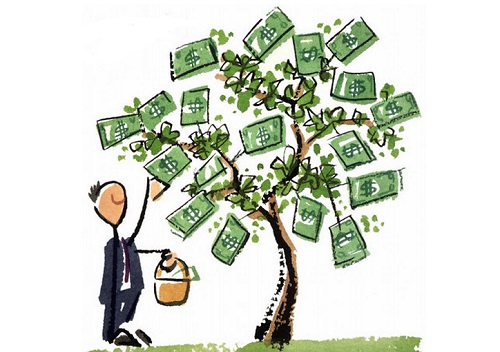
1. Teach Them That Money Does Not Grow on Trees
Picking From The Money Tree


The most important lesson these days which many kids don’t seem to understand is that money does not grow on trees. They seem to think that money just appears magically, which is why they kick up a fuss when the parents do not buy them new toys. Teach them that money is finite and that parents need to work to earn the money.

2. Make Them Work For Money
kids working


There is no better way to teach kids the value of money other than working for money. Let them earn money through jobs like helping out at work especially if you have a family business or running errands. Be careful though not to offer monetary rewards for housework chores, as that should be something where everybody in the household contributes.

3. Show Them How to Budget
kids budgeting


Even if you are unable to get the kids started on earning money, you can certainly still introduce them tobudgeting. You should first understand the expenses involved, such as buying food and drinks at school before giving them daily pocket money. After some time, gradually move to weekly pocket money instead. Explain to them that the money is to be used for the whole week, so they need to budget how they want to spend daily to make sure that they do not use all the money at the end of the week. By the time they become teenagers, moving to a monthly budget might make sense as well.

4. Get Them Involved In Outdoor Activities and Sports
family hiking


Kids these days spend too much time on the Ipad/Iphone and video games. Get the kids involved in outdoor activities such as hiking and sports such as soccer and stuff. Not only are these activities low cost or free, they help to keep the kids healthy and build up social skills as well as family bonding especially if you make them a family activity.

5. Get Them Started on Investing
kids investing


What happens to the money which they save? The idea of keeping them in a piggy bank is outdated. You need to teach them aboutinvesting concepts and perhaps even help to pay interest on their savings so that they can watch their money grow. As they grow their money, it will motivate them to save even more. When they are ready, you can begin to teach them more advanced financial concepts like running a business, investing in dividend stocks etc. In fact, a good way is to help them start investing using a regular investment plan.
If you are able to do all of the above, you can be sure that your child will have a head start in their personal finances and the financial discipline instilled would carry them through life, turning them into a financially responsible and savvy adult.

Tuesday, July 28, 2015

WHY GERMANS WORK FEWER HOURS BUT PRODUCE MORE: A STUDY IN CULTURE

Cultivate German work habit... very impressed with their culture... FOCUS & DILIGENT during work
Don't check Facebook, chit-chat, no private email, gossip, email are short and sharp to the point

When many Americans think of Germany, images of WWII soldiers and Hitler often come to mind. But what many people don’t realize is that Germany is the industrial powerhouse of Europe, and is a leading manufacturer of goods for export to developing Asian nations. We don’t hear about the superiority of German engineering in Volkswagen commercials for nothing!
The economic engine of the EU, Germany single-handedly saved the Eurozone from collapse in 2012. At the same time, German workers enjoy unparalleled worker protections and shorter working hours than most of their global counterparts. How can a country that works an average of 35 hours per week (with an average 24 paid vacation days to boot) maintain such a high level of productivity?

Working Hours Mean Working Hours

In German business culture, when an employee is at work, they should not be doing anything other than their work. Facebook, office gossip with co-workers, trolling Reddit for hours, and pulling up a fake spreadsheet when your boss walks by are socially unacceptable behaviors. Obviously, in the United States these behaviors are frowned up on by management. But in Germany, there is zero tolerance among peers for such frivolous activities.
In the BBC documentary “Make Me A German“,  a young German woman explained her culture shock while on a working exchange to the UK.
“I was in England for an exchange… I was in the office and the people are talking all the time about their private things… ‘What’s the plan for tonight?’, and all the time drinking coffee…”
She was quite surprised by the casual nature of British workers. Upon further discussion, the Germans reveal that Facebook is not allowed in the office whatsoever, and no private email is permitted.

Goal-Oriented, Direct Communication Is Valued

German business culture is one of intense focus and direct communication. While Americans tend to value small talk and maintaining an upbeat atmosphere, Germans rarely beat around the bush. German workers will directly speak to a manager about performance reviews, launch into a business meeting without any ‘icebreakers’, and use commanding language without softening the directives with polite phrases.Whereas an American would say, “It would be great if you could get this to me by 3pm,” a German would say, “I need this by 3pm”.
When a German is at work, they are focused and diligent, which in turn leads to higher productivity in a shorter period of time.

Germans Have a Life Outside Work

Germans work hard and play hard. Since the working day is focused on delivering efficient productivity, the off hours are truly off hours. Because of the focused atmosphere and formal environment of German businesses, employees don’t necessarily hang out together after work. Germans generally value a separation between private life and working life.
The German government is currently considering a ban on work-related emails after 6pm, to counter the accessibility that smartphones and constant connectivity give employers to their employees. Can you imagine President Obama enacting such a policy in the United States?
To occupy their plentiful Freizeit, most Germans are involved in Verein (clubs); regularly meeting others with shared interests in their community. Common interests in Germany includeSportvereine (sports clubs), Gesangvereine (choirs or singing clubs), Musikvereine (music clubs),Wandervereine (hiking clubs), Tierzuchtvereine (animal breeding clubs – generally rabbits/pigeons) and collectors’ clubs of all stripes. Even the smallest village in Germany will have several active Vereinen to accommodate residents’ interests. Rather than settling in for a night of TV after work, most Germans socialize with others in their community and cultivate themselves as people.
Germans also enjoy a high number of paid vacation days, with many salaried employees receiving 25-30 paid days (the law requires 20). Extended holidays mean families can enjoy up to a month together, renting an apartment by the seaside or taking a long trip to a new, exciting city.

Business Respects Parenthood

Germany’s system of Elternzeit (“parent time” or parental leave) is the stuff of fantasy for most working Americans. The United States does not currently have laws requiring maternity leave, while Germany has some of the most extensive parental protection policies in the developed world. The downside of these maternity leave benefits is that employers may avoid hiring women (with the fear that they will take advantage of the extensive benefits), and German boardrooms are consistently male-dominated at a higher rate than other developed nations, although the government is working to eradicate this trend. The financial benefits of staying home (from both Elternzeit and Elterngeld or parents’ money programs) are often too good to pass up for German mothers, and can lead to stagnant or non-existent careers.
Since “at will” employment does not exist in Germany, all employees have contracts with their employer. Parents who have been gainfully employed for the previous 12 months are eligible for Elternzeit benefits, which include up to three years of unpaid leave with a “sleeping” contract. The employee is eligible to work part-time up to 30 hours while on leave, and must be offered full-time employment at the conclusion of the parental leave. Parents may also choose to postpone up to one year of their leave until the child’s 8th birthday. Either parent is eligible for parental leave, and many couples make the choice based on financial considerations.
In addition to the preservation of the employee’s contract, the state will pay up 67% of the employee’s salary (with a cap of 1800 Euros per month) for 14 months. Parents may split the 14 months however they choose. These benefits apply equally to same-sex couples.
Have you picked your jaw up off the floor yet?

Put Some German In Your Office

The German work culture is very different from the average American office, but there are certainly lessons to be learned from our German counterparts. The diligent focus Germans bring to their working life is to be admired. Separating work from play can help us lead a more balanced life; putting the phone down after hours gives us a mental break from stressing about work, and we can return to the office refreshed in the morning. When it’s time to get something done, closing Facebook and turning off push notifications helps keep our minds quiet and the flow steady. Direct conversation can lead to increased efficiency, and more clarity of communication among team members.
Americans often equate longer hours with increased production and superior work ethic, but examining the German model makes one wonder: When it comes to time at work, maybe less really is more!

Sunday, July 12, 2015

Habits of the World’s Wealthiest People

Following these traits won’t necessarily make you rich…
..but they are worth a shot'
richest-people

Wednesday, June 24, 2015

About Revenue, Gross Margin, Cash Flow, CapEx, Net Income & EPS

Revenue
Revenue is the amount of money that a company actually receives during a specific period. It is the "top line" or "gross income" figure from which costs are subtracted to determine net income.

Gross Margin
The gross margin represents the percent of total sales revenue that the company retains after incurring the direct costs associated with producing the goods and services sold by a company. The higher the percentage, the more the company retains on each dollar of sales to service its other costs
and obligations.

Gross Margin (%) =   Revenue - Cost of Goods Sold
                                              Revenue
This number represents the proportion of each dollar of revenue that the company retains as gross profit. For example, if a company's gross margin for the most recent quarter was 35 percent, it would retain $0.35 from each dollar of revenue generated, to be put toward paying off sales, general and administrative expenses (SG&A), interest expenses and distributions to shareholders. The levels of gross margin can vary drastically from one industry to another depending on the business. For example, software companies will generally have a much higher gross margin than a manufacturing firm.

Cash Flow From Operating Activities 
An accounting term that indicates money a company brings in from ongoing, regular business activities, such as manufacturing and selling goods or providing a service. Cash flow from operating activities does not include long-term capital or investment costs. It does include earnings before interest (EBIT) and taxes plus depreciation minus taxes.
Also called operating cash flow or net cash from operating activities, it can be calculated as follows:
Cash Flow From Operating Activities = EBIT + Depreciation – Taxes

Capital Expenditure
Capital expenditures, or CapEx, are funds used by a company to acquire or upgrade physical assets such as property, industrial buildings or equipment. It is often used to undertake new projects or investments by the firm. This type of outlay is also made by companies to maintain or increase the scope of their operations. These expenditures can include everything from repairing a roof, to purchasing a piece of equipment, or building a brand new factory.
The amount of capital expenditures a company is likely to have depends on the industry it occupies. Some of the most capital-intensive industries have the highest levels of capital expenditures including semiconductors, oil exploration and production, telecom, manufacturing and utilities.

Cash, Short-Term Investments and Long-Term Investments 
This includes bank account cash and marketable securities (e.g., government bonds, corporate bonds and/or securities and money market funds).

Net Income
Net Income is a company's total earnings (or profit). Net income is calculated by taking revenues and adjusting for the cost of doing business, depreciation, interest, taxes and other expenses. This number is found on a company's income statement and is an important measure of how profitable the company is over a period of time.
The measure is also used to calculate earnings per share. This number is often referred to as "the bottom line" because net income is listed at the bottom of the income statement.

Earnings Per Share 
This is the portion of a company's profit allocated to each outstanding share of common stock. Earnings per share (EPS) serves as an indicator of a company's profitability.

EPS =   Net Income - Dividends on Preferred Stock
              Average Number of Outstanding Shares

Sunday, June 7, 2015

The 46 Most Brilliant Life Hacks Every Human Being Needs To Make Life Easier

I love finding clever solutions to the little snags I come across in cooking, building, cleaning, or just about anything. These are some that I find myself using all the time!

1. Use retail hangers as chip clips

Use 20retail%%% 20hangers 20AS% 20chip% 20clips

2. For the always-falling zipper

For% 20the% 20always-falling 20zipper%

3.

4. Fit two bowls into a small microwave

Fit 20two%%% 20bowls 20into% 20a% 20small% 20microwave

5.

6. Use a leaf blower and PVC pipes to clean gutters without a ladder

% 20Use% 20a% 20leaf 20blower%%% 20and% 20PVC 20pipes% 20to% 20clean 20gutters%%% 20a% 20without 20ladder

7. The easiest way to make an ice cream sandwich

The% 20easiest% 20way% 20to% 20an% 20ice 20make%%% 20cream 20sandwich

8. Unclog drains without expensive chemicals

Unclog drains without expensive chemicals
Pour a half a cup of baking soda and a cup of vinegar into a clogged drain. Once it stops foaming rinse down the sink and your drains will be clear. A cheap and environmentally friendly way to unclog a sink!

9.

10.

11. Stop people from stealing your pens at work

Stop% 20people% 20from% 20stealing 20your%%% 20at% 20pens 20work

12. Putting your phone into airplane mode will charge it twice as fast

20Putting 20your%%%% 20into% 20phone 20airplane% 20mode% 20will% 20it% 20twice 20charge%%% 20AS 20fast

13.

14.

15. Fix a blurry phone camera

Fix% 20a% 20blurry% 20phone% 20camera

16. Wrap a wet paper towel around beer, and put it in the freezer to cool in just 2 minutes

Wrap%20a%20wet%20paper%20towel%20around%20beer%2C%20and%20put%20it%20in%20the%20freezer%20to%20cool%20in%20just%202%20minutes

17.

18. Use a can opener on obnoxious plastic packaging

% 20Use% 20a% 20can% 20on% 20obnoxious 20opener%%% 20plastic 20packaging

19.

20.

21.

22. Create a bright light in a pinch

Create% 20a% 20bright% 20light% 20in% 20a% 20pinch
When camping or just in a pinch, a standard headlamp strapped to a 1 gallon jug of water can illuminate an entire room or tent.

23.

24. Tell which side an exit ramp will be on

Tell 20which%%% 20an% 20side 20exit% 20ramp% 20will% 20on% 20be

25.

26. Chinese containers are designed to fold out into plates

Chinese 20containers%%% 20are% 20to% 20designed 20fold% 20out% 20into% 20plates

27. Run the razor across old jeans to resharpen and extend its life.

Run% 20the% 20razor 20across%%% 20old 20jeans% 20to% 20and% 20extend 20resharpen%%% 20its 20life.

28.

29.

30. Unwrinkle a shirt in a flash

Unwrinkle% 20a% 20shirt% 20in% 20a% 20flash

31. Perfectly cut cherry tomatoes all at once

Perfectly cut cherry tomatoes all at once

32. Keep a pot from bubbling over

Keep% 20a%% 20from% 20pot 20bubbling% 20over

33. Soft-drink lids can double as coasters

Soft-drink 20lids%%% 20can% 20double 20AS% 20coasters
Avoid getting a tongue lashing from your mom for putting your cold drink on her new coffee table.

34. Pinching the end of a banana is a far easier way to open it.

Pinching the end of a banana is a far Easier way to open it.

35. Adding a teaspoon of of baking soda when you boil eggs and the shell will come off easily.

Adding%20a%20teaspoon%20of%20of%20baking%20soda%20when%20you%20boil%20eggs%20and%20the%20shell%20will%20come%20off%20easily.

36. If you don’t have baking soda, then peel away a small hole at the top of the boiled egg and a large one on the bottom. Finally, put the small hole close to your mouth and blow.

If you do not-have baking soda, Then peel away a small hole at the top of the boiled egg and a wide one on the bottom.  Finally, could the small hole close to your mouth and blow.

37. Stack clothes vertically side by side in the dresser to save a lot of room

Stack%20clothes%20vertically%20side%20by%20side%20in%20the%20dresser%20to%20save%20a%20lot%20of%20room

38. Charge your phone while traveling

Load 20your%%% 20phone 20while% 20traveling
Many hotel TVs have handy USB slots in the back that will charge most smartphones.

39. Folding shirts doesn’t have to be a tedious chore.

Folding shirts Does not-have to Be a tedious chore.

40. Pulling the bones out of a chicken wing makes it easier to eat. Just twist the bone and pull.

Pulling the bones out of a chicken wing Makes it easier to eat.  Just twist and pull the bone.

41. Place a plastic bottle on top of a yoke and gently squeeze to separate egg yolks from egg whites

Place%20a%20plastic%20bottle%20on%20top%20of%20a%20yoke%20and%20gently%20squeeze%20to%20separate%20egg%20yolks%20from%20egg%20whites

42. Save space when packing a spare change of clothes.

Save 20space%%% 20when 20packing% 20a% 20spare% 20change% 20of% 20clothes.% 20

43.

44. Use AAA batteries in devices that require AA

Use 20AAA%%% 20in% 20batteries 20devices% 20that% 20require% 20AA
Use AAA batteries in gadgets that need AA batteries by filling the gaps with scrunched up tin foil. It won’t last as long as AAs but it’ll help you out when you’re in a pinch!

45. Avoid Elevator Pranksters

Avoid 20Elevator%% 20Pranksters

46. Play games without ads.

Play 20games%%% 20without 20ads.
Putting your phone in airplane mode while gaming will stop those annoying ads from playing!
Good luck! Your life may never be the same again…

Stop Pushing Water Down - Push It Back for Real

Good video on our arm movement by @oceanswimschool